

A bigger splash
Thoughts on David Hockney, Rosalia, and the Venus de Milo

‘The world is very beautiful, very beautiful, if you look at it.’
I'm sad to report I haven't been home much lately, hence the lack of garden updates.
About a month ago there was a blunder during the routine spring cleanup, where the garden received a rather aggressive whiffle cut. She's bounced back to some degree, but it's been hard not to wince at the bald patches where the tulips ought to have been.
Like the heatwave baking my friends in the U.K. and Europe right now, it's difficult not to look at everything through the lens of climate change. Everything remaining in Lantern's garden has gone off early. The first spray of roses has already passed, and the hydrangeas are in full bloom before the Fourth of July. A friend suggested it may have been the unusually mild winter. I managed to fly home just in time to catch the peonies on their way out, a symphonic display, if also a little unsettling. Meanwhile, the dahlias I put in May are in the middle of a growth spurt.
As mentioned, I’ve been a little nomadic lately, with brief stretches back here before restocking my suitcase. Rosalía recently shared a beautiful note about life on tour, describing the strange courage it takes to live as a nomad. So much of it resonated with me (and more on her extraordinary concert below). Friends have been sending me music, books, and films to keep me company, and I’ve been happily returning the favor. I’ve also found myself revisiting old favorites.
On a whim, I rewatched A Bigger Splash, a perennial favorite in this house. A few days later, I woke up in the Castro to the news of David Hockney's passing.
Half documentary / half fictionalized retelling of Hockney's breakup with artists and muse Peter Schlesinger, A Bigger Splash may not seem especially radical today. But in 1973, celebrity reality shows didn't exist, certainly none so openly hedonistic or gay. Aside from D. A. Pennebaker's Don't Look Back, which followed a surly Bob Dylan around England in 1965, very few public figures had allowed a camera to trail them around with such intimacy. Madonna’s Truth or Dare wouldn’t arrive for nearly two more decades, and even then its candor felt shocking, a measure of how unusual Hockney’s openness really was.
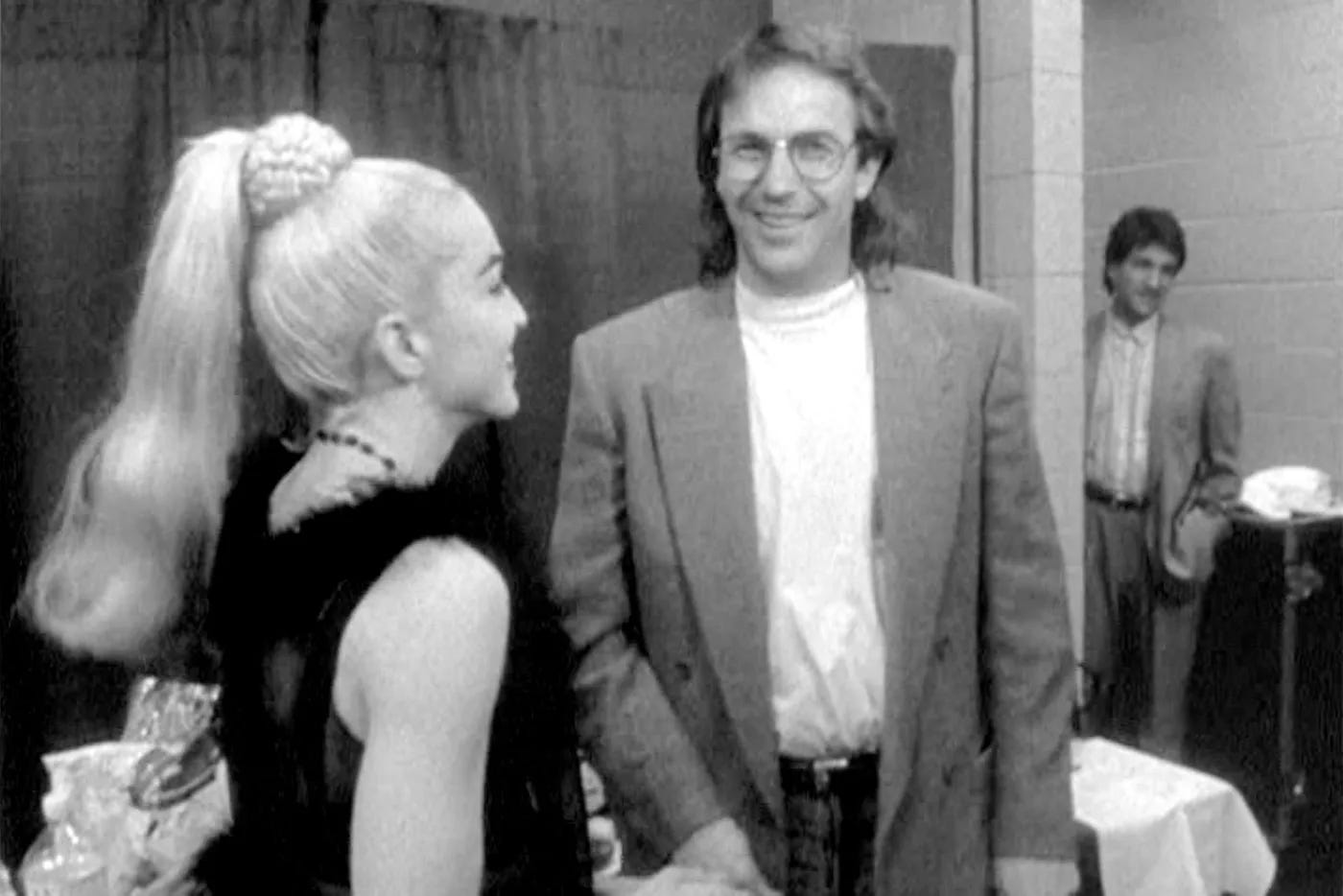
That openness, though, came with some buyer's remorse. After seeing an early cut of the film, Hockney reportedly shut himself away for two weeks, wishing he'd never agreed to make it. I get the impulse. Sometimes, after I release something, there's a brief stretch where I want to crawl under a rock and pretend none of it ever happened.
Therein lies one of the silliest contradictions of being an artist: spending years plumbing the depths in search of something worth sharing, only to feel slightly embarrassed the moment people finally experience it.
Not for nothing, Hazan's camera captures indolence extraordinarily well. It lingers generously on beautiful men tanned in the California sun. Frolicking, diving, sunbathing, hooking up. Much of it is languid, voyeuristic, and unmistakably horny. Desire is central to the atmosphere, as essential as the So-Cal light itself.
It’s a gossipy, weird, self-indulgent, and utterly captivating watch — all qualities I happen to admire in a work of art. Shot on 35mm and paired with Patrick Gowers’ hazy, Schoenbergian score, it feels less like a documentary than an invitation to spend a sticky summer afternoon wandering through someone else’s creative life. Like many of Hockney's paintings, the perspective feels fly-on-the-wall while remaining carefully composed. Hazan later described the film as "a fictionalised replica of the era... it's all artifice. It's not fly-on-the-wall. These things didn't really happen."
The easy read is that it’s the story of a breakup. But I've never really thought of it as being about heartbreak. To me, it's about what makes artists tick. What I see Hockney wrestling with is his own creative process. The best scenes show how creatives relate, in all of our navel-gazey glory. What does it mean as an artist to build a good life? Hockney wonders aloud if it hasn’t got something to do with his environs. Should he move to New York? Stay in London alongside friends like Celia Birtwell and Ossie Clark? How about Paris? In the end, I think he chose to be everywhere. I'd be lying if I said I haven't felt that same restless pull. There is a way a nomadic life can render us like clay, spurring us into new forms. When you paint or write or make songs, sometimes you need your entire external landscape upended to push you outside of your comfort zone or a creative rut. And yet, as the truism says, anywhere we go, there we so frequently are. Hockney would always return back to his practice.
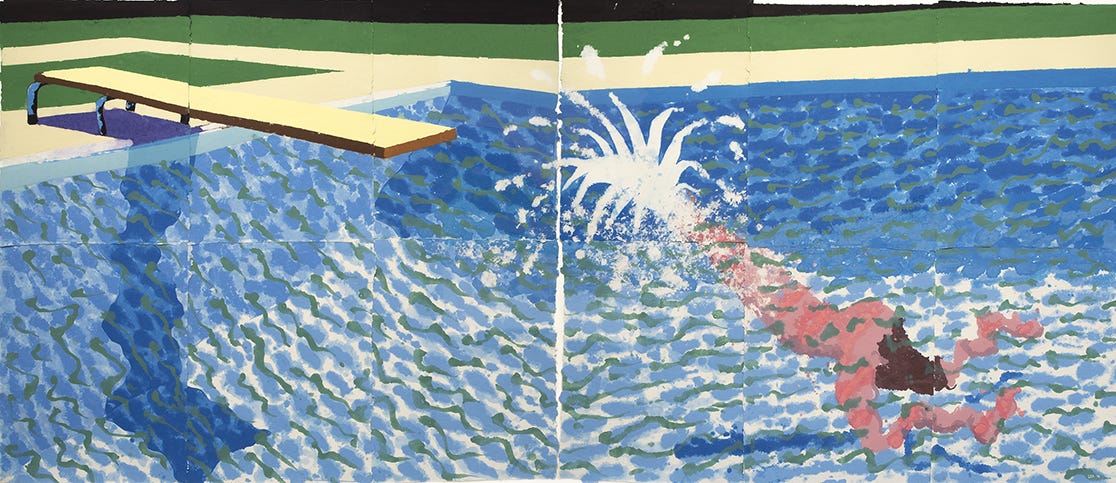
As it happened, I already had tickets to the Matisse exhibition at SFMOMA that week, so I wandered upstairs afterward to spend some time with Hockney's A Large Diver, painted during the years surrounding A Bigger Splash. You can see Hockney playing with form and depth. How do we portray a splash? A body under rippling water? With squiggles and a white starburst and Seurat-esque dots in blue and and green.
Every city finds the painter who brings it to human scale.
Postwar New York had Edward Hopper. His paintings are full of long shadows, slanted afternoon light, and stark, ordinary architecture rendered in a somber palette, with most details stripped away as in Nighthawks or Drug Store. His New York is beautiful and lonely. The restraint is surgical.
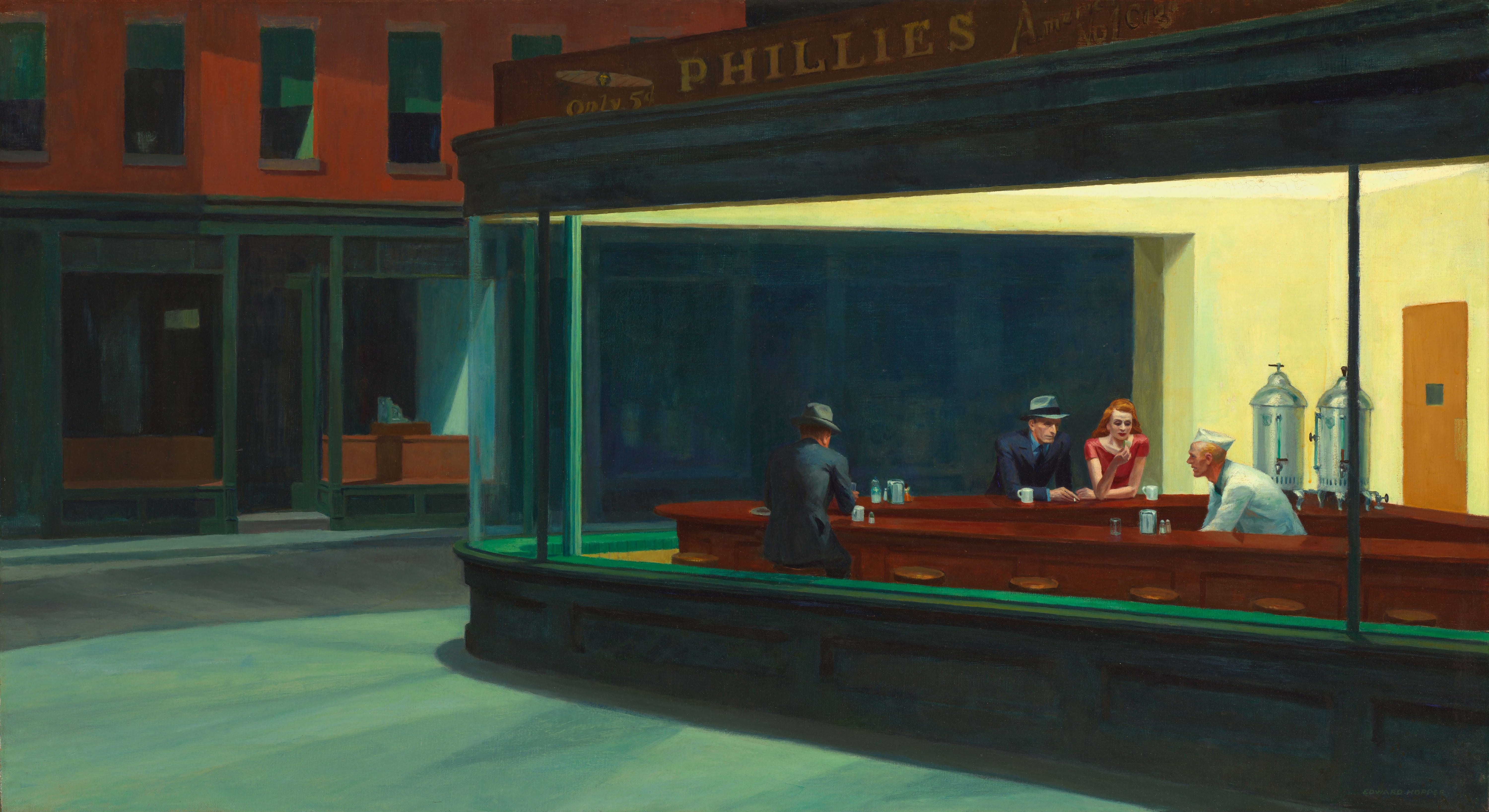
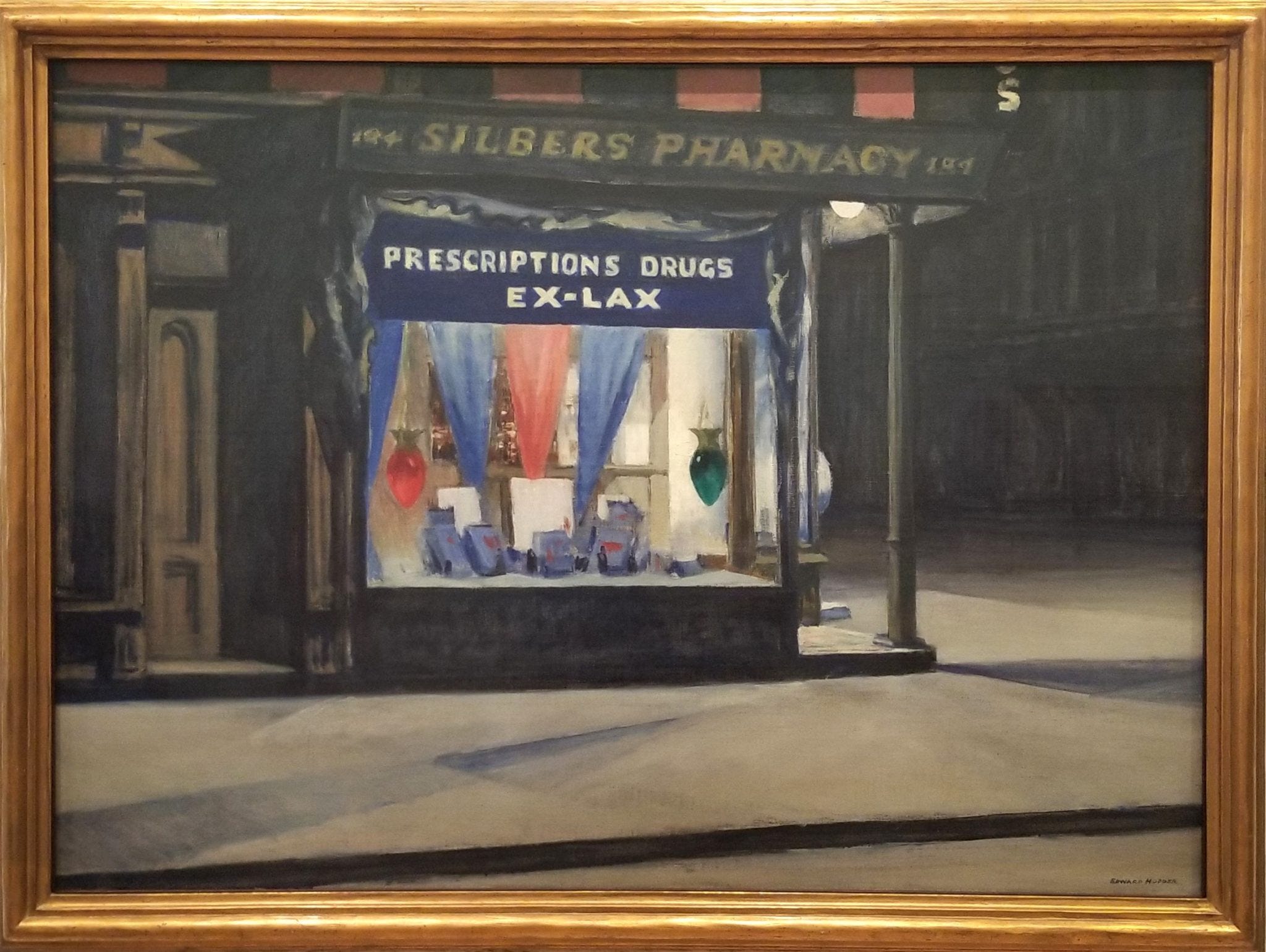
While in a totally opposite color scape, I think of Hopper’s visual grammar as an extension of Hopper’s, filtered through a Southern California lens. Both employed the tableau fixe, Hopper with oil, Hockney with acrylic. Yet rarely do their paintings actually feel static. Figures seem poised on the edge of something: a conversation, a hookup, a sunburn. Cities feel suspended just before the workday begins or the last shift ends, before the sidewalks begin to shimmer with heat. And like Hopper, Hockney understood the dialogue between architecture and the people who inhabit it, taking the utterly mundane and enlarging it for us to take a closer look.
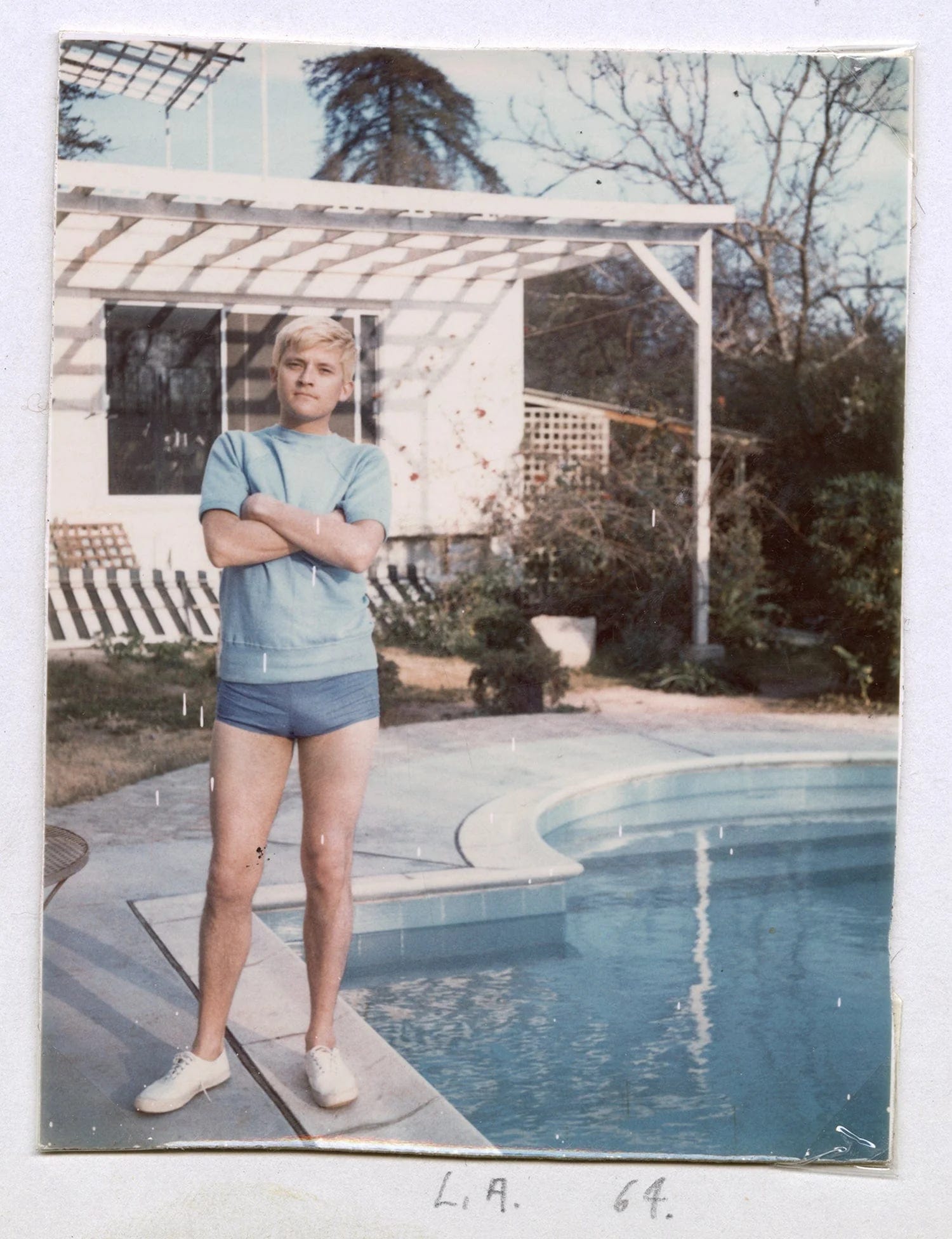
Hockney arrived in LA shortly after graduating from the Royal College of Art. The antithesis of gray postwar London, and, conveniently, home to Physique Pictorial, the beefcake magazine he collected and used for early figure subjects. Homosexuality remained illegal in Britain until 1967. California offered something else entirely. Turquoise swimming pools seemingly everywhere, dazzling light, and a radically different relationship to work and pleasure.
If New York had Hopper, he quickly realized no one had really painted Los Angeles.
“My God,” he later recalled thinking. “This place needs its Piranesi.”
Soon after, he took a position teaching at UCLA where he met Schlessinger.
’That’s what I should do, go to California. Treat it like a spa. The thing is I always think nostalgia’s a bit kind of decadent in a way, and yet I’m always going back to the same places.’
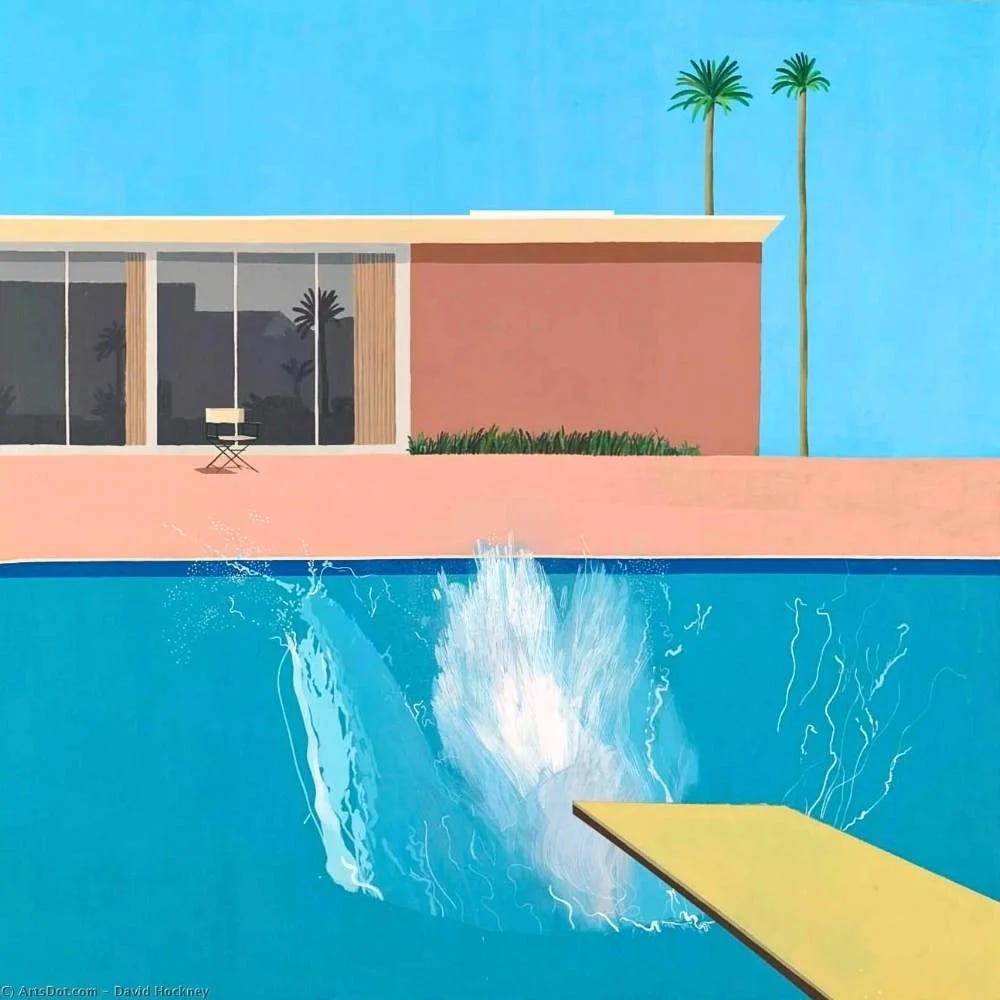
The swimming pool offered him a perfect technical puzzle. Water is notoriously difficult to paint, its movement, transparency, and distortions. And how do you set that against the vast, flat intensity of a cloudless sky? Acrylic paint dried quicker than oils, allowing him to experiment with surface, reflection, and geometry.
The pool became the perfect backdrop to paint everything else. Schlesinger climbing from a pool, the hot afternoon sun splashed against a modernist building. Granted, it is a very white and cis male vision of queerness, but I have always admired how he made gay lives feel beautifully unremarkable.
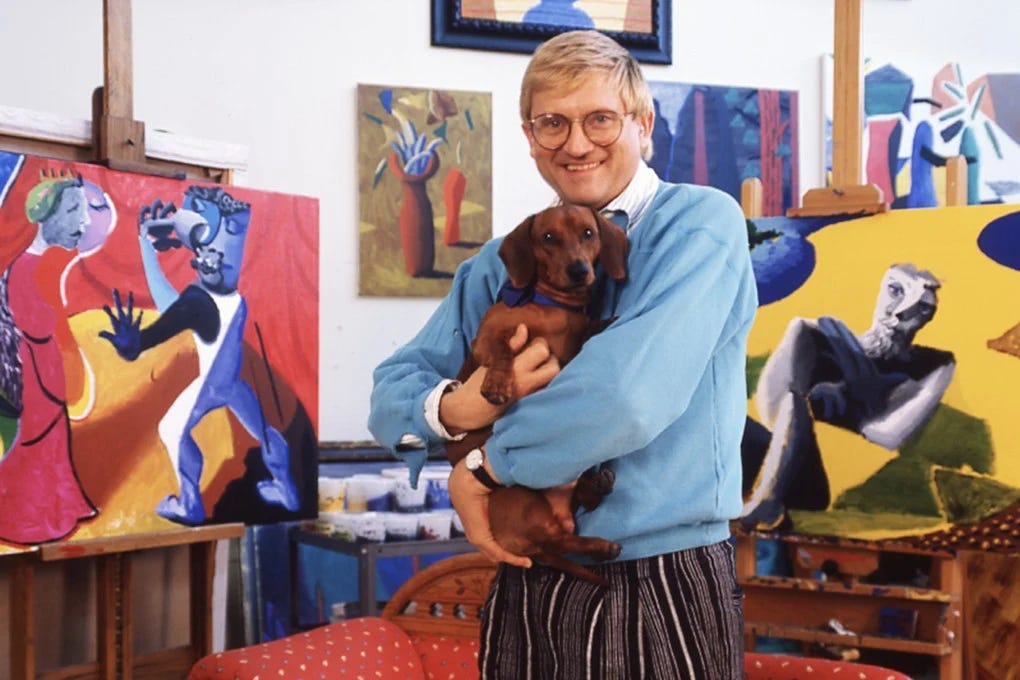
Maybe the other reason I’ve always held him dear is how his sensualism spilled into all aspects of his life. Like Warhol’s wig or Picasso’s Breton knit, Hockney’s personal style was easily identifiable: peroxide blonde (because blondes really do have more fun), rugby polos, and thick-rimmed Cutler & Gross coke-bottle glasses. You can see it in the way he paired his checked wool suits with yellow crocs. The striped tulips on the table. The way he arranged his many homes. And you can hear it when he waxes philosophical about his work. He was someone who knew the secret to any creative practice is to show up as often as you can, at one point sleeping with a sign at the foot of his bed that read “GET UP AND START WORK IMMEDIATELY!” He relished the work, and few mediums were off limits. If painting wasn’t working, he drew, or took photographs. He produced opera sets and landscapes. He painted portraits of the people he loved, which only increased in momentum as AIDs tore through his circle of friends in the 80s. Painting became another way to remember them by.
The artists I look up to most refuse to separate beauty from ordinary living. In so many ways, his life was a work of art. Painting a room lilac because you feel like it, planting a garden with clashing color, setting a gaudy ass table for friends, choosing the perfect pair of glasses. None of these feel secondary to work. They are the work.
As he once told Architectural Digest:
“What I am doing, slowly, is making my own environment, room by room, as artists do. Of course it’s fun.”
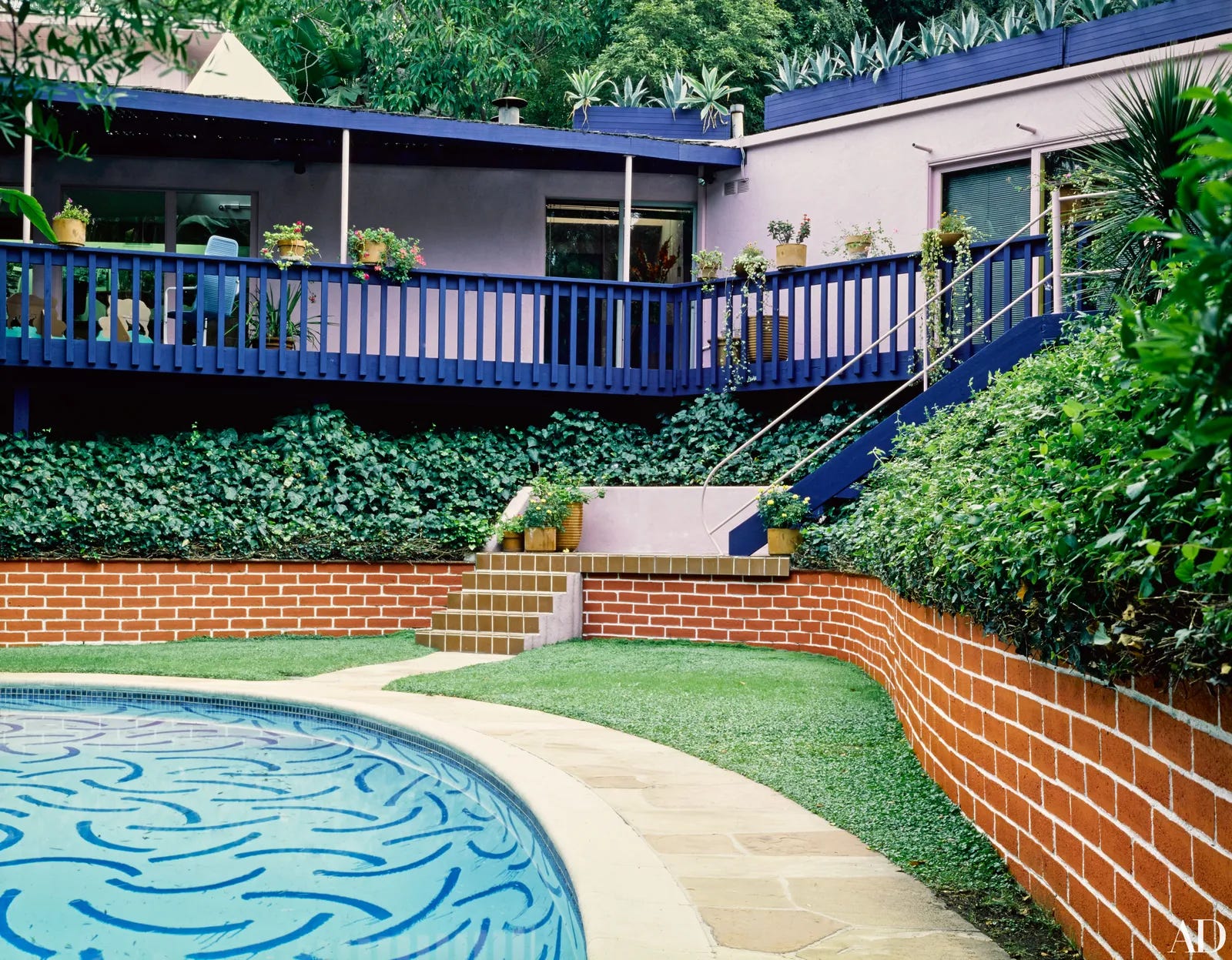
In him I see a vision of queer life that extends far beyond the art we make. It’s the clothes we wear, the homes we build, the families we choose, the care and pleasure we cultivate.
Gilda, are you decent?
In light of everything else happening in the world right now, it is easy to wonder what place pleasure and creativity have, but as we run down the last hours of Pride month and I think we owe it to ourselves to root down here.
In A Bigger Splash, I see a time capsule of carefree gay lives before AIDs would interrupt these communities a decade later. We don’t know what we’ll be asked to live through in our lifetimes, a fact I have been sitting with lately.
Recently I was lucky enough to see Rosalía's Lux tour, and I haven't stopped thinking about it since. Set in 4 acts, it’s giving Dada. It’s giving Dali. It brought heaven down to earth. Lux is a prime example of an artist being generous with their gifts. Across the album is a density of ideas it’s almost hard to keep up with: opera, baroque, techno, flamenco, fado, pop. But on stage, this is amplified by dance and spectacle. It was playful, sexy, sorrowful, and often funny. I feel like I’m just spitting out a bunch of word salad — some things are better experienced with your own eyes and ears. I was moved to tears multiple times. The show felt like a reaffirmation of the unique beauty humans are capable of creating. Although yes, this was an arena show for a verified pop star, it was human collaboration on widescreen display. A live orchestra, a full dance troupe, the set technicians coming on to the platform to assist with a costume change or water break. On a technical level, her singing was astounding. But whenever the seams were allowed to show through, it somehow made the feat of virtuosity more impressive. Who needs AI when humans are capable of this?
One sequence for ‘La Perla,’ choreographed by Dimitris Papaioannou, strips the iconography of the Venus de Milo down to almost nothing: hands, gloves, shadow, suggestion. Stacks of forearms become a skirt, wings, a rib cage, a veil, a wings. It may be one of the most beautiful, suggestive pieces of performance art I've ever witnessed.
It immediately called to mind Rita Hayworth’s performance of ‘Put the Blame on Mame’ in Gilda — one of the most iconic stripteases and hair flips ever put to celluloid. Is it camp or is it not? That is the question. That scene minted Hayworth as a femme fatale and would go on to inspire legion, from Fellini’s fountain scene in the Dolce Vita to the creators of Jessica Rabbit, to countless stunting drag queens. It’s taking an idealized female form dating all the way back to antiquity, with all of its loaded connotations, and flipping it on its head.
Few things feel “fine” in the world right now, but I am making a concerted effort to appreciate beauty wherever I can. The sunsets drawing out close to 9pm. A room I’ve made my your own. Someone I love, sitting across the room from me. Scotland’s Tartan Army drinking Boston dry. A handful of roses. It pays dividends to be deliberate about what you pay closer attention to. It cannot fix all that feels broken, but celebrating and seeking out beauty on your own personal terms can be defiant in its own way.
I think Hockney was right. The world is very beautiful, if you look at it.
Wishing all of you a happy pride season that extends all year long.
CD
P.S. While you’re at it, if you’ve loved Rosalia’s Lux as much as I have, you might enjoy this heart-stopping rendition of Berghain by Spain’s aquatic swimming team. I continue to marvel at what bodies are capable of!
If you liked this issue…
I’d love to hear from you. I read every message people send.
And if you haven’t already done so, please consider subscribing. Not only will you get every issue delivered right to your inbox, but it helps support more writing like this.
Notes from Lantern House is a reader-supported publication. To receive new posts and support my work, consider becoming a free or paid subscriber.
The Rosalia show was the best thing I have seen in so, so long. It was so great to see it in Boston, I cried so much. She seemed a bit raw, as far as I could tell! I sort of want to chuck it all in and follow her around. I made my husband go to her show in New York the following week (thanks to the Knicks tickets were a passable price!)
Although I’m not usually much of a visual art person, the paintings you shared here really made me feel things! Especially the barren Hopper paintings. And I think your read on their historical importance and meaning is spot on