

Opening the vault
Inside the messy, fragile process of preserving old work — plus an unreleased demo.

Hello and welcome to volume 48.
I’ve been revisiting a lot of older work lately, and with it, the mess of my own record-keeping.

I’ve never been all that nostalgic or interested in looking back. It always felt a little hokey. But something’s shifted. Maybe it’s turning 40 and recognizing that time is finite. If you don’t take stock of your archives or attic, no one else is likely to.
The thing about starting your career as a kid is that you operate…like a kid. You don’t hold onto anything. You move cross-country twice and sell off your belongings both times. Masters sent to you over WeTransfer feel evergreen, until six years go by and the link is dead. Instrumentals? You could have sworn you squirreled them away somewhere, maybe they’re on that old hard drive with an obsolete USB 2.0. Or backups you put away for safe keeping don’t turn on anymore. Or you labeled your hard drives with creative names like “XTRA LIFE” that mean nothing to you now. So now I’m on a bit of a wild-goose chase for stems.
Stems and mixes age about as well as the hard drives they live on. Plugins disappear. Sound libraries become incompatible. I have a friend whose graduate work focused on this exact thing—the difficulty of protecting digital archives. We love to say the internet is forever, but in many ways whatever we render digitally has a half-life.
Sorry to bore you with such administrative weeds, but I’m confronting the fact that I’m nowhere near as organized or “future-proofed” as I assumed. It’s reminded me how I wasn’t all that invested in my future when it came to my career. With all my generalized anxiety, I live best in the present. It’s the place where I feel I have the most say in what comes next.
I started with the photos first, because I felt like those might be hardest and I wanted to get that out of the way. But no, they actually were lovely reminders of the people I worked with. Like this, the still from Derrick Belcham’s video for No Devotion. Without trying to, we stumbled on to the exact right moment for the cover.
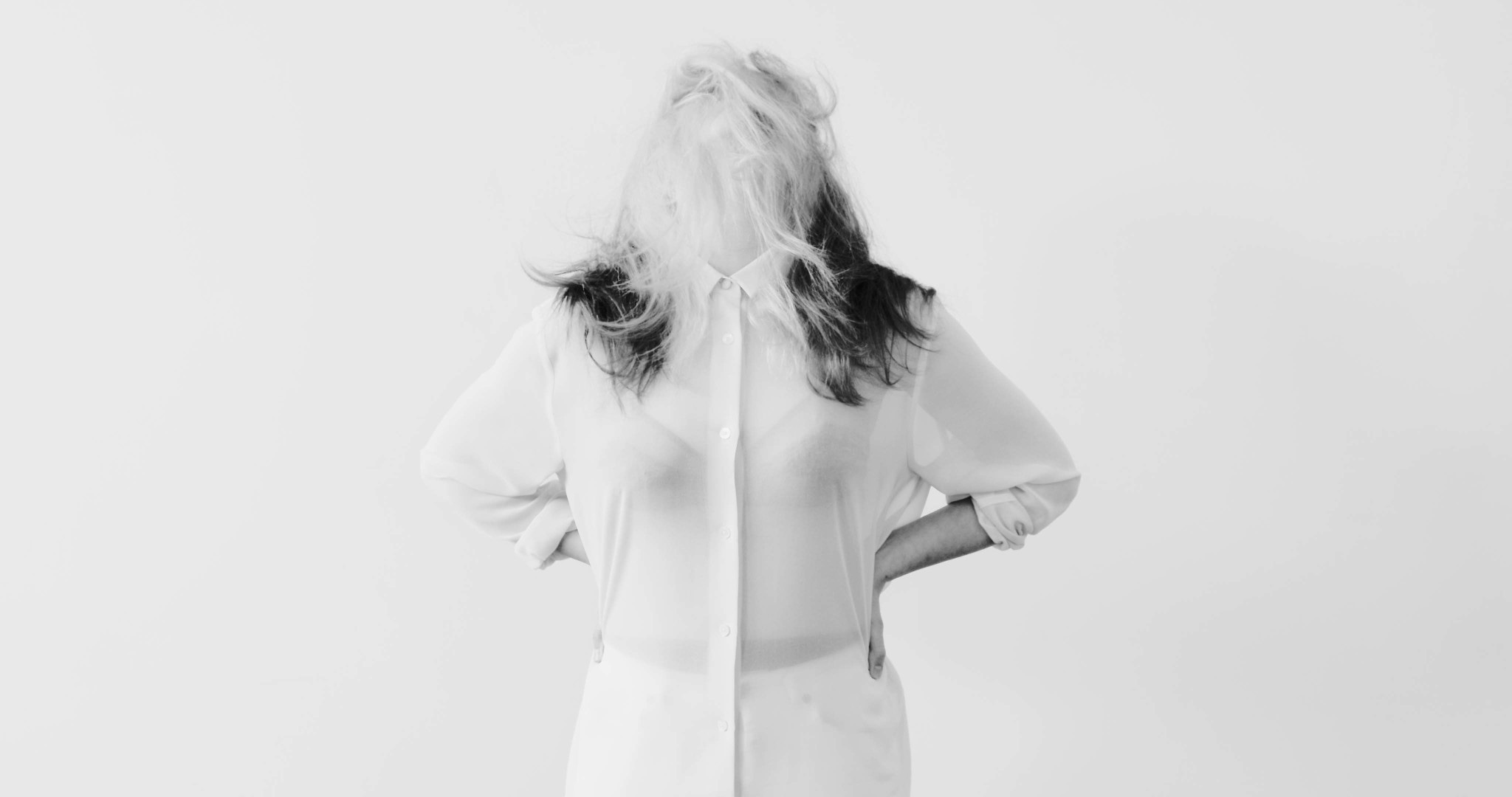
It’s hard to open the past without confronting how long I’ve been my body’s worst critic. So many shots were eliminated because I didn’t like the angle of my nose or chin or my hips or whatever. I want to tell you this doesn’t happen anymore, but like most people, I still find myself sometimes going down this lane as I age. It’s amazing how dumb comments online can really stick with you. But Lahaina Alcantara’s photography is so sensitive and beautiful, and if I have any regret, it’s not using more of the work she contributed. Some Francesca Woodman vibes. I think at the time I didn’t like how sad and depressed I looked. But I was sad and depressed! I think she found the beauty in it where I couldn’t.
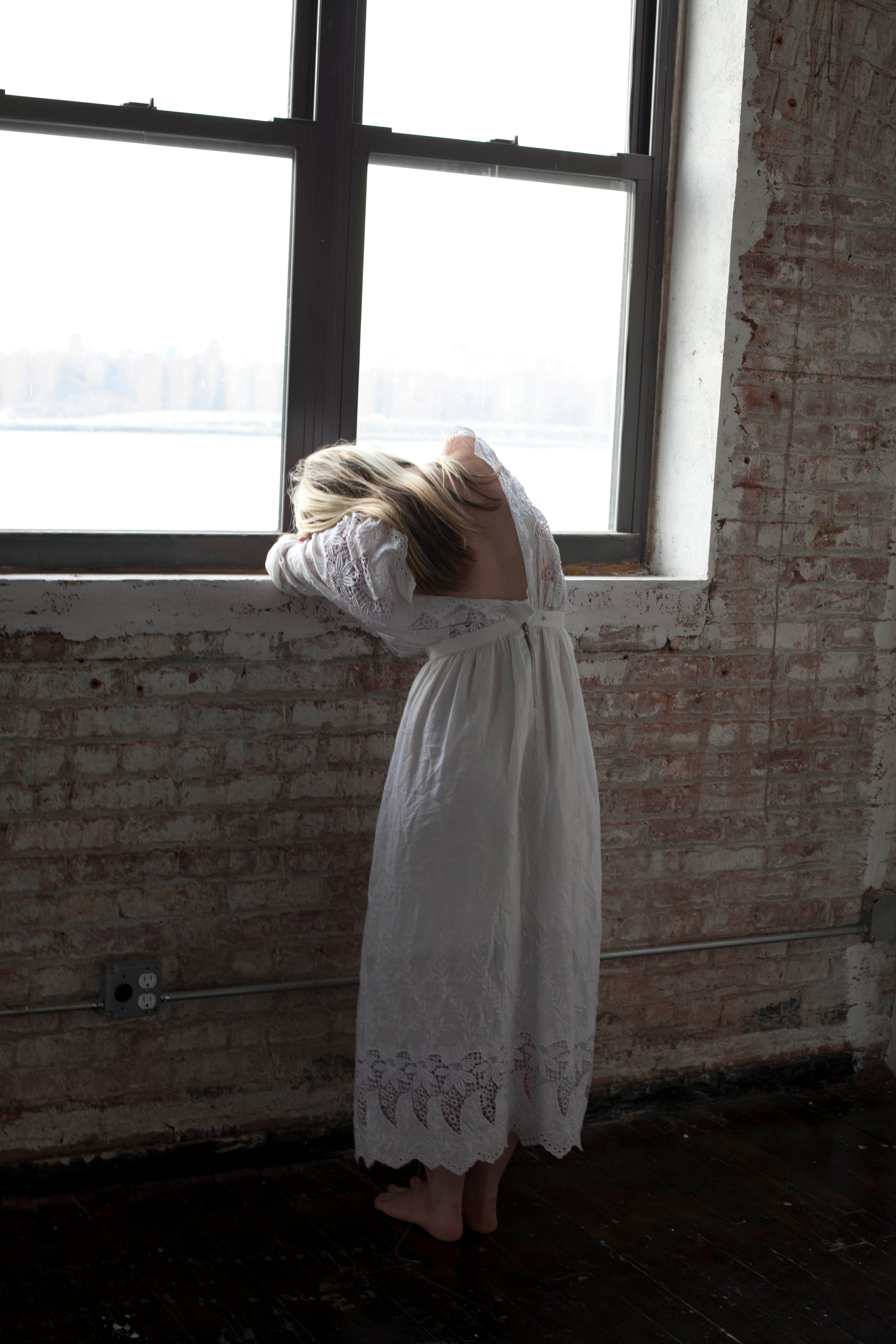
The most interesting part of this process has been finding older versions of released work. Baby, in particular, was probably the hardest record I’ve ever made. I don’t know how much I’ve talked about it, but I was coming out of a brutal period and felt like I was on my knees the entire time. Even after it was released, there wasn’t the usual catharsis I feel after putting out an album, because performing those songs every night seemed to pull me back into the mindset I was trying to climb out of.
Comparitively, My Heart of an Outlaw has been such a joyful process — both the making of it, the publishing, and the question of performing the songs live. They’re just so extroverted and fun.
But not every album is like that. Some projects come with tougher lessons. Baby was one of those. I had a number of false starts with really talented people in Portland, Montreal, and Wisconsin. The songs wouldn’t congeal. Looking back, I think that had a lot to do with feeling unsafe and unsettled, trying to leave a deeply fucked-up situation. My regret, one I know is common among artists, was believing the album would redeem me. That it was okay to stay in turmoil, as long as the music was good. That I could endure as long as the songs came together in the end. It took years to understand it doesn’t work that way. The work cannot save you. Only you can - with support, therapy, community, rest. I look back at some of the promotional junkets for the album and can see how unhealthy I was in my face. It was a hard chapter, hence, why I’ve been so reluctant to go back there.
In the summer of 2012, I went to Montreal with songs in various states of disarray. In the past, that was fine; the studio could function as a forcing mechanism. It was my playground. I was grateful to be away from home, where I was almost certain my problems were compounding. But I struggled to focus, and when I left I had a literal tangle of stems, more than 15 songs, none of them really working.
I eventually took what I had to Aprilbase in the Midwest, hoping I’d find more clarity there. But you know how this story goes. We worked on “David” and layered the Prophet on it. Some of what came out of there was great, but I felt distracted. There was one song I desperately wanted to make work, but it wouldn’t come together, partly because nothing I’d recorded in Montreal was to grid. That song was called “For Nancy,” named for a dear friend of mine.
Here’s the demo:
Eagle eyes will already know that eventually it became a song on Imitation of a Woman to Love.
Listening to the demo for the first time in 13 years, I was surprised to find myself enjoying it. There’s a lot of strain in it, but strain isn’t always as cringe as you might think. I sound like I’m wrestling something much bigger than me, which makes sense. I was. I still think the final version was the right one, but I wanted to share this (pitchy parts and all) because if you’re working on something and feeling stuck, have faith. Sometimes things take years to finish and to find their true home. What started as a piano ballad ended up finding its way as a pop banger.
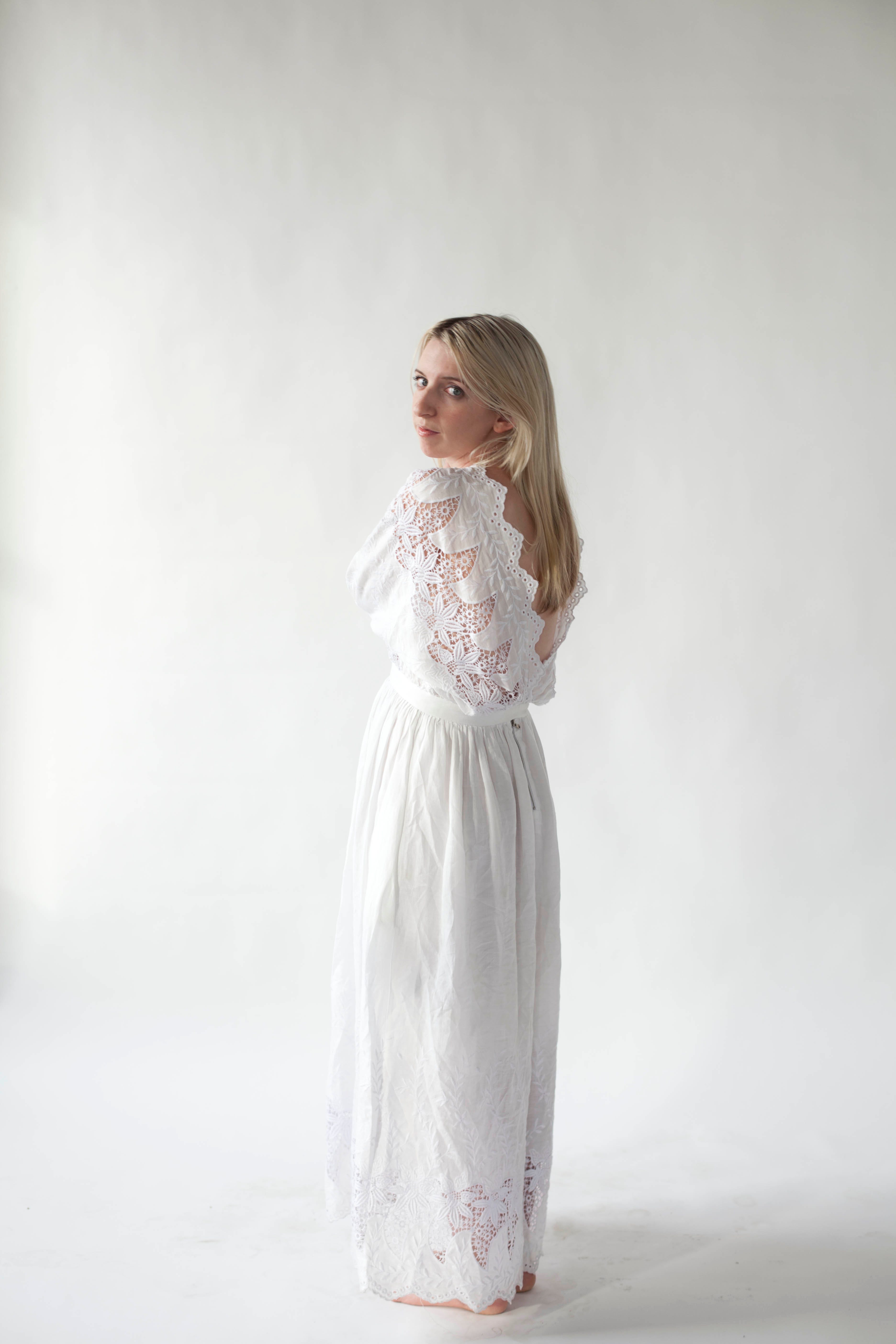
There’s so much in that demo that was stunning to hear. I’d forgotten all of it. Many choices in there that surprised me: the reversed grand piano, the entirely organic feel of it, no click track in sight. I love the grandiosity of the bridge progression (“We’re a mad pair, you and I / each of us right on opposing sides”). Maybe because I was writing about someone so vital to me, more was weighing on it than a typical song. I wanted to capture the unique quality of long-haul friendship, how it stretches, challenges, and enriches you. In many ways, it might be one of the most romantic songs I’ve written, because it’s purely about love: accepting that you won’t always see eye-to-eye, and being grateful for the ways a close friend pushes you to show up better in the world.
The lyrics in the demo are completely different from the finished version. Does one feel more “true” to the original inspiration? Honestly, they all felt true at the time. And had I pushed this version harder, it would’ve been tricky anyway — there was a lot of vocal bleed in the piano track. That experience taught me a lot about mic technique, though. On My Heart Is an Outlaw, we found the performances were stronger when I played piano and sang simultaneously. For songs like “Turncoat,” it made the vocal delivery stronger. We only punched in at the beginning, I think.
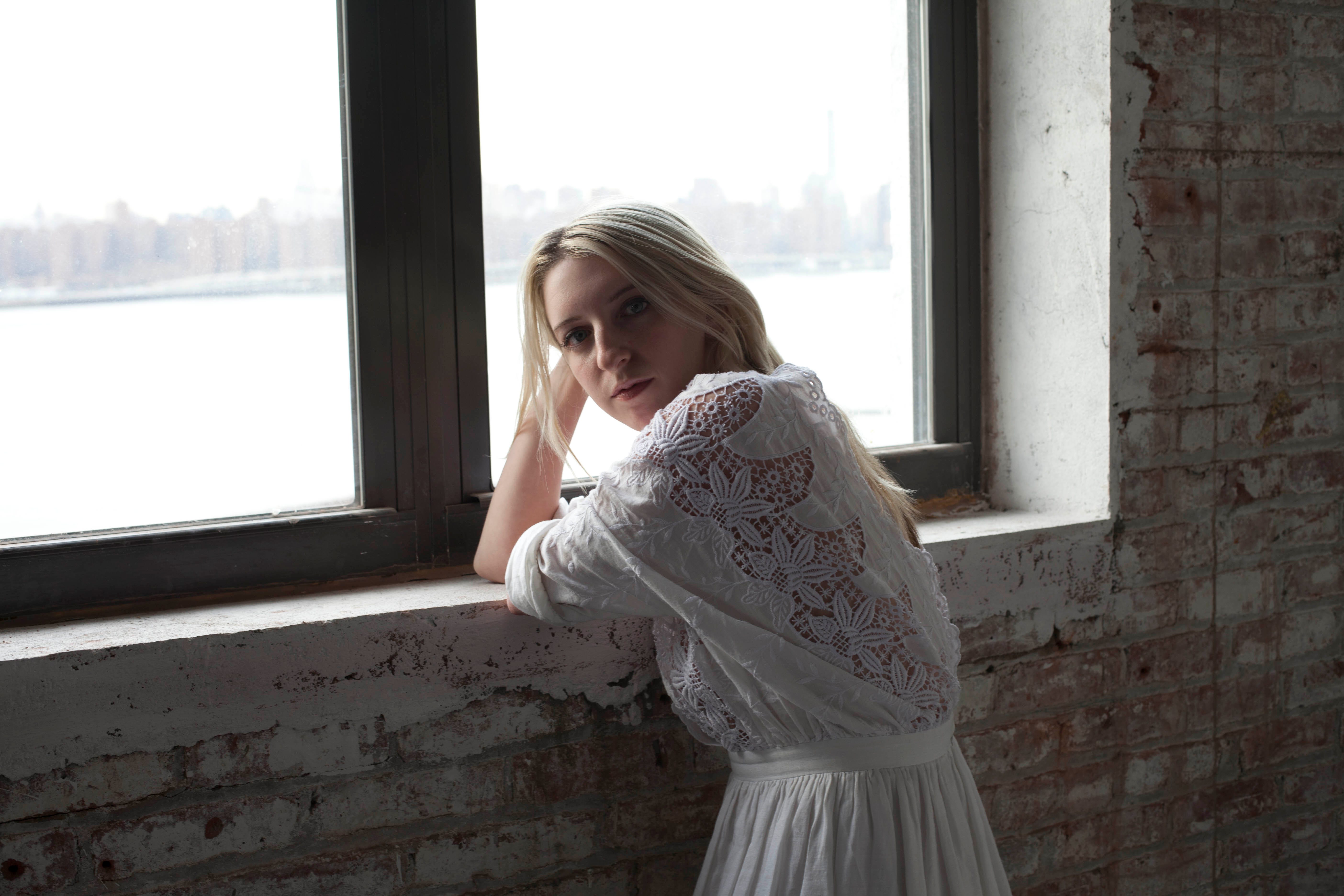
I’m usually hesitant to share anything unpolished, but I’ve been pleasantly surprised by the pleasure of going back in time. I’m proud of that younger version of me who was writing through a hard chapter. All that frustration led me to producing —and not to toot my own horn, but Matt LeMay and I did some exciting sonic work on Baby that later helped shape Imitation of a Woman to Love. Songwriting may be my first love, but production is absolutely my second.
Nothing really came together until Matt jumped in. Where some friends had suggested I simplify things, Matt encouraged me to go deeper and define my own sound. There may be songs I’d tackle differently now, but you don’t get the layers on No Devotion without those months spent looking at the mess of my own archive and pulling the tracks together, piece by piece. I don’t think you get a People Can Change or Seventeen without Ring the Bell, which started with one vocal loop hook and took ages to make sense of. I’m still charmed by everything Cole Kamen-Green contributed as an arranger.
All the samples, the dense layers of sound, the organic drums from S. Carey and Neal Morgan stacked with my programming, the multi-layered and manipulated vocal loops. It’s the sound of someone in the thick of it. The distortion made emotional sense. Revisiting it now, feeling so far from that mindset, is oddly tender. I’m very glad to no longer be in that state of mind, but perhaps that album is a record of my way out. It’s interesting to see the choices I made, and the logic behind them. Hold a lot of sympathy for that younger me. Really proud of them for getting through it. I was listening to a podcast the other day where someone described anxiety as “when I’m having a good day, I know it’s temporary. But when I’m having a bad day, it feels like it will last forever.” I sometimes wish I could go back in time and tell them “these feelings are temporary.” But I can tell myself that now on those off days. Back then, I really couldn’t.
I suppose this post is my way of saying it’s okay to look back every now and then. It’s okay for songs to have many lives, past and present. Just like us people, songs are meant to transform over time.
Out of curiosity, if I ever put together and released a collection of archival work, would you be interested in that? Let me know below.
Until next time.
xo
CD
If you liked this issue…
I’d love to hear from you. I read every message people send.
And if you haven’t already done so, please consider subscribing. Not only will you get every issue delivered right to your inbox, but it helps support more writing like this.
Wow, great to hear that demo! So different than "Nancy", but love the shared lines, and just how dynamic it is. Thoughtful beautiful words about it all too. It's so easy for listeners to associate their own times with an album— it's easy to forget that the artist themself can do the same, and albums can bring up good or bad times, weird times, etc, and with how strong even my connection can be to an album, I can see why artists would dislike revisiting periods of their life in the form of something as visceral as music. Great write up!
Thank god for you and your ability to reflect and distill. I am also not nostalgic and it’s also mostly because I don’t want to deal with sloppy record keeping. Like who closed last night 🙄 But I know a few shiny things are in the rubble. Thank you for sharing, loved it!